-
The Future of Generative AI Solutions for Legal Services
Generative AI has rapidly transformed many sectors, and the legal industry is no exception. As technology advances, the future of generative AI solutions in legal services promises even more significant changes. These developments are expected to enhance efficiency, accuracy, and client satisfaction while addressing current challenges and limitations. This article explores the future of generative AI solutions for legal services, highlighting emerging trends, potential advancements, and the impact on legal practice.

Introduction to Generative AI in Legal Services
Generative AI involves the use of artificial intelligence technologies to create new content or data based on input parameters. In the legal sector, generative AI is employed to automate various tasks, such as document drafting, legal research, and client interactions. By leveraging sophisticated algorithms, generative AI solutions for legal streamline workflows, reduce manual effort, and improve the overall quality of legal services.
Importance of Generative AI in Legal Services
- Efficiency: Automates repetitive tasks, allowing legal professionals to focus on more complex and strategic work.
- Accuracy: Enhances the precision of legal documents and analyses by minimizing human error.
- Cost-Effectiveness: Reduces operational costs by automating labor-intensive processes.
Emerging Trends in Generative AI for Legal Services
As generative AI technology evolves, several trends are shaping its future in the legal sector:
1. Enhanced Natural Language Processing (NLP)
Future generative AI solutions for legal will feature more advanced natural language processing capabilities, enabling them to better understand and generate legal language.
- Contextual Understanding: Improved NLP will allow AI systems to grasp the nuances and context of legal language, resulting in more accurate and relevant content generation.
- Complex Document Handling: Enhanced NLP will facilitate the creation and analysis of complex legal documents, such as intricate contracts and multi-jurisdictional agreements.
2. Integration with Blockchain Technology
Blockchain technology and generative AI are expected to converge, offering new possibilities for legal services.
- Smart Contracts: AI-powered platforms will automate the creation and management of smart contracts on blockchain networks, ensuring transparency, security, and compliance.
- Immutable Records: Blockchain integration will provide immutable records of legal transactions and documents, enhancing trust and reducing disputes.
3. Advanced Predictive Analytics
Generative AI will leverage advanced predictive analytics to provide deeper insights and forecasts.
- Case Outcome Predictions: AI systems will analyze historical data and case law to predict the likely outcomes of legal disputes, assisting lawyers in strategy formulation and case planning.
- Risk Assessment: Enhanced predictive analytics will enable more accurate risk assessments, helping legal professionals identify potential issues and mitigate risks effectively.
4. Personalized Legal Services
The future of generative AI solution for legal will involve even more personalized legal services tailored to individual client needs.
- Customized Legal Advice: AI platforms will analyze client data to generate highly personalized legal advice and recommendations, improving the relevance and effectiveness of legal solutions.
- Adaptive Solutions: Generative AI will provide adaptive legal solutions that evolve based on client interactions and feedback, ensuring that services remain aligned with client needs.
5. AI-Driven Legal Research and Document Review
Generative AI will continue to enhance legal research and document review processes.
- Comprehensive Research: AI systems will conduct comprehensive legal research by analyzing vast amounts of case law, statutes, and regulations to provide actionable insights and recommendations.
- Efficient Document Review: AI-powered tools will streamline document review by automatically identifying relevant information, inconsistencies, and potential issues.
6. Improved Client Interaction and Support
Generative AI will further improve client interactions and support through advanced communication tools.
- Intelligent Chatbots: Future chatbots will provide more sophisticated responses and support, handling complex legal inquiries and offering personalized assistance.
- Virtual Legal Assistants: AI-powered virtual assistants will manage client communications, schedule appointments, and provide real-time updates on case progress.
7. Ethical and Regulatory Considerations
As generative AI becomes more prevalent in legal services, ethical and regulatory considerations will play a crucial role.
- Transparency and Accountability: Ensuring transparency in AI decision-making processes and maintaining accountability for AI-generated content will be critical for preserving trust and integrity in legal services.
- Data Privacy and Security: Addressing data privacy and security concerns will be essential to protect sensitive client information and comply with regulatory requirements.
Potential Advancements in Generative AI Solutions
Several advancements are on the horizon for generative AI solutions in the legal sector:
1. Quantum Computing Integration
Quantum computing has the potential to revolutionize AI capabilities, including those in the legal field.
- Enhanced Processing Power: Quantum computing will provide significantly greater processing power, enabling AI systems to analyze complex legal data and generate insights at unprecedented speeds.
- Advanced Algorithms: Quantum algorithms will enhance AI’s ability to solve complex legal problems and perform sophisticated analyses.
2. AI-Powered Legal Analytics Platforms
Future AI-powered legal analytics platforms will offer advanced features and functionalities.
- Real-Time Analytics: AI platforms will provide real-time analytics on legal trends, case developments, and client behavior, allowing for more agile and informed decision-making.
- Predictive Modelling: AI will use predictive modelling to forecast legal trends and client needs, helping law firms anticipate changes and adapt their strategies accordingly.
3. Collaboration with Legal Tech Startups
Collaboration with legal tech startups will drive innovation in generative AI solutions.
- Innovative Solutions: Partnerships with startups will result in the development of innovative AI tools and applications tailored to specific legal needs and challenges.
- Accelerated Development: Collaborations will accelerate the development and deployment of new AI technologies, bringing cutting-edge solutions to the legal market faster.
Impact of Generative AI on Legal Practice
The future of generative AI will have a profound impact on legal practice, influencing various aspects of the industry:
1. Transformation of Legal Workflows
Generative AI will transform legal workflows by automating routine tasks and streamlining processes.
- Increased Efficiency: Legal professionals will experience increased efficiency as AI handles repetitive tasks, allowing them to focus on more strategic and complex work.
- Improved Collaboration: AI tools will facilitate better collaboration between legal teams by providing shared platforms for document management, research, and case analysis.
2. Enhanced Legal Research and Strategy
AI-driven advancements will enhance legal research and strategy formulation.
- Data-Driven Insights: AI will provide data-driven insights that inform legal strategies and decision-making, helping lawyers develop more effective arguments and approaches.
- Strategic Planning: AI-powered predictive analytics will support strategic planning by forecasting case outcomes, litigation trends, and client needs.
3. Elevated Client Experience
Generative AI will elevate the client experience through personalized and efficient services.
- Tailored Solutions: Clients will benefit from tailored legal solutions that address their specific needs and preferences, resulting in more effective and relevant legal advice.
- Improved Communication: AI-enhanced communication tools will offer timely and personalized interactions, enhancing client satisfaction and engagement.
4. Ethical and Professional Considerations
As generative AI becomes more integrated into legal practice, ethical and professional considerations will be paramount.
- Professional Standards: Ensuring that AI-generated content meets professional standards and adheres to ethical guidelines will be crucial for maintaining the integrity of legal services.
- Regulatory Compliance: Law firms and legal professionals will need to stay updated on regulatory changes related to AI and ensure compliance with evolving legal standards.
Conclusion
The future of generative AI solutions in the legal sector is poised to bring transformative changes, offering enhanced efficiency, accuracy, and client satisfaction. Emerging trends, such as advanced natural language processing, blockchain integration, and personalized legal services, will shape the evolution of AI technology in legal practice. While there are challenges to address, including ethical and regulatory considerations, the potential benefits of generative AI are substantial. As technology continues to advance, generative AI will play an increasingly vital role in redefining the landscape of legal services, driving innovation, and improving the delivery of legal solutions.
-
How to Implement a Generative AI Solution for Retail: A Comprehensive Guide
The retail industry is experiencing a significant transformation with the advent of generative AI. This cutting-edge technology offers a plethora of opportunities for enhancing customer experiences, streamlining operations, and driving innovation. In this comprehensive guide, we will explore how to implement a generative AI solution for retail, providing detailed steps, key considerations, and the benefits it offers.

Introduction: The Impact of Generative AI on Retail
Generative AI leverages advanced algorithms to create new content, make predictions, and optimize processes. For retailers, this means the ability to offer personalized shopping experiences, optimize inventory management, and develop innovative marketing strategies. As the competition intensifies, integrating a generative AI solution for retail has become essential for staying ahead.
Key Benefits of Generative AI in Retail
Before diving into the implementation process, let’s outline the key benefits of generative AI in the retail sector:
1. Enhanced Customer Experience
- Personalized Recommendations: AI analyzes customer data to provide tailored product recommendations, increasing satisfaction and sales.
- Virtual Assistants: AI-powered chatbots engage with customers in real-time, offering assistance and improving service quality.
2. Operational Efficiency
- Inventory Optimization: AI predicts demand trends and optimizes inventory levels, reducing stockouts and excess inventory.
- Supply Chain Management: AI analyzes supply chain data to identify inefficiencies and suggest improvements, enhancing overall efficiency.
3. Marketing Innovation
- Content Generation: AI generates marketing content such as product descriptions, social media posts, and email campaigns, saving time and resources.
- Dynamic Pricing: AI algorithms adjust prices based on market trends, competition, and demand, maximizing profitability.
4. Product Development
- Design Generation: AI assists in creating new product designs based on consumer preferences and trends.
- Trend Analysis: AI analyzes market data to identify emerging trends, guiding product development strategies.
Steps to Implement a Generative AI Solution for Retail
Implementing a generative AI solution in retail involves several steps, from planning and data preparation to deployment and monitoring. Here’s a detailed guide:
Step 1: Define Objectives and Use Cases
1.1 Identify Goals
- Customer Engagement: Determine how AI will enhance customer interactions, such as through personalized recommendations or virtual assistants.
- Operational Efficiency: Identify operational areas that can benefit from AI, such as inventory optimization and supply chain management.
1.2 Specify Use Cases
- Marketing: Define how AI will be used in content generation and dynamic pricing strategies.
- Product Development: Outline how AI will assist in product design and trend analysis.
Step 2: Data Collection and Preparation
2.1 Gather Relevant Data
- Customer Data: Collect data on customer preferences, purchase history, and behavior.
- Inventory Data: Gather data on inventory levels, sales patterns, and supply chain metrics.
2.2 Data Cleaning and Preprocessing
- Data Cleaning: Remove irrelevant or erroneous data points to ensure data quality.
- Preprocessing: Normalize and structure data for effective AI model training.
Step 3: Choose the Right AI Platform
3.1 Evaluate AI Platforms
- Features and Capabilities: Assess different AI platforms based on their features, such as natural language processing, machine learning, and data analytics.
- Integration Options: Ensure the platform can integrate seamlessly with your existing systems and workflows.
3.2 Select a Platform
- Vendor Comparison: Compare vendors based on pricing, support, and scalability.
- Pilot Testing: Conduct pilot tests to evaluate the platform’s performance and suitability for your use cases.
Step 4: Develop and Train AI Models
4.1 Model Selection
- Pre-trained Models: Consider using pre-trained models that can be fine-tuned for specific retail applications.
- Custom Models: Develop custom models tailored to your unique requirements.
4.2 Model Training
- Training Data: Use the prepared data to train the AI models, focusing on relevant tasks and objectives.
- Hyperparameter Tuning: Optimize model parameters to improve performance and accuracy.
Step 5: Deployment and Integration
5.1 Deploy the AI Platform
- API Integration: Develop APIs to integrate the AI platform with your existing systems, such as CRM and ERP systems.
- Infrastructure: Ensure your IT infrastructure can support the deployment, with adequate storage and processing power.
5.2 Integration with Business Processes
- Workflow Integration: Integrate AI solutions into existing workflows, ensuring a smooth transition and minimal disruption.
- Employee Training: Train employees on how to use AI tools effectively, emphasizing the benefits and operational changes.
Step 6: Monitoring and Optimization
6.1 Continuous Monitoring
- Performance Metrics: Track key performance metrics to assess the AI platform’s impact on operations and customer experience.
- Error Detection: Monitor for errors or anomalies in AI-generated outputs, addressing issues promptly.
6.2 Model Optimization
- Regular Updates: Update AI models with new data and retrain them periodically to maintain accuracy and relevance.
- Feedback Loop: Implement a feedback loop to continuously improve AI models based on user feedback and performance data.
Challenges and Considerations
While implementing a generative AI solution offers numerous benefits, there are also challenges and considerations to keep in mind:
1. Data Privacy and Security
- Customer Data Protection: Ensure that customer data is handled securely and in compliance with data protection regulations.
- Cybersecurity Measures: Implement robust cybersecurity measures to protect AI systems from potential threats.
2. Ethical AI Use
- Bias Mitigation: Address potential biases in AI models to ensure fair and unbiased decision-making.
- Transparency: Maintain transparency in AI processes, ensuring customers and stakeholders understand how AI is being used.
3. Scalability
- Scalable Solutions: Choose AI platforms and infrastructure that can scale with your business growth.
- Future-Proofing: Stay informed about emerging AI technologies and trends to ensure your solutions remain competitive.
4. Change Management
- Stakeholder Buy-In: Secure buy-in from key stakeholders by demonstrating the value and benefits of AI integration.
- Employee Adaptation: Support employees in adapting to AI-driven changes through training and continuous support.
Case Studies: Successful AI Implementation in Retail
Case Study 1: Amazon
- Use Case: Personalized Recommendations
- AI Implementation: Amazon uses AI to analyze customer data and provide personalized product recommendations, enhancing the shopping experience and driving sales.
Case Study 2: Walmart
- Use Case: Inventory Management
- AI Implementation: Walmart leverages AI to predict demand trends and optimize inventory levels, reducing stockouts and improving supply chain efficiency.
Case Study 3: Sephora
- Use Case: Virtual Assistants
- AI Implementation: Sephora uses AI-powered virtual assistants to engage with customers, answer queries, and provide personalized beauty advice, improving customer satisfaction.
Conclusion: Embracing Generative AI for Retail Transformation
Integrating a generative AI solution for retail offers transformative benefits, from enhanced customer experiences to streamlined operations and innovative product development. By following a structured approach to implementation, retailers can harness the power of AI to stay competitive and drive growth. Engaging with AI consulting firms can provide valuable expertise and support throughout the integration process, ensuring successful implementation and optimization.
As the retail industry continues to evolve, embracing generative AI will be crucial for staying ahead of the curve and meeting the ever-changing needs of consumers. By leveraging AI’s capabilities, retailers can unlock new opportunities, improve efficiency, and deliver exceptional value to their customers.
-
Unleashing Sales Potential: Key Features of an AI Copilot for Sales
Introduction
In today’s fast-paced business environment, sales teams are continually seeking innovative solutions to drive performance and efficiency. Enter the AI copilot for sales, a game-changing technology designed to augment and streamline the sales process. By integrating artificial intelligence into sales operations, businesses can leverage powerful tools to enhance productivity, gain deeper insights, and optimize their strategies. This article delves into the core features of AI copilots for sales, exploring how these advanced tools can transform the way sales teams operate.

What is an AI Copilot for Sales?
An AI copilot for sales is an advanced artificial intelligence system that supports and enhances various aspects of the sales process. Acting as a virtual assistant, it leverages machine learning, natural language processing, and predictive analytics to provide real-time insights, automate routine tasks, and offer strategic recommendations. The goal of an AI copilot is to empower sales teams with the tools they need to close deals more effectively and efficiently.
Core Features of an AI Copilot for Sales
1. Intelligent Lead Management
Automated Lead Scoring
AI copilots revolutionize lead management through:
- Predictive Scoring Models: By analyzing historical data and customer interactions, AI assigns scores to leads based on their likelihood to convert. This prioritization helps sales teams focus on high-potential prospects and allocate resources more effectively.
- Dynamic Lead Updates: AI continuously updates lead scores in real-time as new information becomes available, ensuring that sales teams always work with the most accurate and relevant data.
Enhanced Lead Nurturing
AI copilots improve lead nurturing by:
- Personalized Communication: AI automates and personalizes outreach efforts, such as follow-up emails and messages, based on the lead’s behavior and engagement history. This tailored approach increases the likelihood of converting leads into customers.
- Content Recommendations: AI suggests relevant content and offers that align with the lead’s interests and stage in the sales funnel, providing a more engaging and effective nurturing experience.
2. Advanced Sales Insights
Predictive Analytics
AI copilots provide valuable insights through:
- Sales Forecasting: AI analyzes historical sales data, market trends, and external factors to generate accurate sales forecasts. This predictive capability helps sales teams anticipate future opportunities and challenges, allowing them to adjust their strategies proactively.
- Opportunity Identification: AI identifies potential sales opportunities by evaluating customer data and engagement metrics, enabling sales teams to target the right prospects at the optimal time.
Real-Time Data Analysis
AI copilots offer real-time insights by:
- Continuous Monitoring: AI monitors sales data and customer interactions in real-time, providing up-to-date information that supports informed decision-making.
- Actionable Recommendations: AI generates actionable recommendations based on real-time data analysis, helping sales teams optimize their tactics and strategies for better results.
3. Workflow Automation
Task Automation
AI copilots enhance efficiency by:
- Routine Task Automation: AI automates repetitive tasks such as data entry, CRM updates, and scheduling, reducing the manual workload for sales teams and minimizing the risk of errors.
- Process Streamlining: AI streamlines sales processes by automating workflows and task assignments, ensuring that sales activities are executed consistently and efficiently.
Process Optimization
AI copilots optimize sales processes through:
- Identifying Bottlenecks: AI analyzes workflow data to pinpoint bottlenecks and inefficiencies in the sales process. This analysis helps sales teams address issues and improve overall productivity.
- Enhancing Coordination: AI facilitates better coordination between sales team members by automating task management and tracking progress, ensuring that everyone is aligned and working towards common goals.
4. Personalized Sales Support
Tailored Recommendations
AI copilots provide personalized support by:
- Customizing Sales Strategies: AI analyzes individual sales reps’ performance data and customer interactions to recommend personalized strategies and tactics. This customization helps sales reps approach each prospect with the most effective methods.
- Real-Time Assistance: AI offers real-time guidance during sales calls and meetings, providing suggestions and insights that help sales reps address customer needs and objections more effectively.
Training and Development
AI copilots support training and development by:
- Personalized Training Programs: AI creates customized training programs based on sales reps’ strengths, weaknesses, and learning preferences. This tailored approach ensures that training is relevant and effective.
- Interactive Simulations: AI provides interactive simulations and role-playing scenarios that mimic real-life sales situations, allowing sales reps to practice and refine their skills in a controlled environment.
5. Enhanced Customer Engagement
Proactive Communication
AI copilots enhance customer engagement by:
- Churn Prediction: AI identifies customers at risk of churn and provides recommendations for retention strategies, enabling sales teams to take proactive measures to maintain valuable relationships.
- Opportunity Detection: AI analyzes customer data to uncover upselling and cross-selling opportunities, helping sales teams engage customers with relevant offers and solutions.
Feedback and Surveys
AI copilots gather customer feedback by:
- Automated Surveys: AI automates the collection of customer feedback through surveys and questionnaires, providing valuable insights into customer satisfaction and preferences.
- Sentiment Analysis: AI analyzes feedback to gauge customer sentiment and identify areas for improvement in products, services, and sales interactions.
6. Seamless Integration
CRM Integration
AI copilots integrate seamlessly with CRM systems by:
- Data Enrichment: AI enhances CRM data by cleaning and updating records, ensuring that sales teams have access to accurate and current information.
- Insight Generation: AI generates valuable insights from CRM data, helping sales teams make informed decisions and tailor their engagement strategies.
Integration with Other Tools
AI copilots integrate with other sales and marketing tools by:
- Cross-Platform Connectivity: AI facilitates integration with various sales and marketing platforms, enabling smooth data flow and coordination across different systems.
- Unified Workflow: AI creates a unified workflow by connecting with tools used for email marketing, social media management, and customer support, enhancing overall efficiency and effectiveness.
7. Scalability and Adaptability
Scalable Solutions
AI copilots offer scalable solutions by:
- Growing with Your Business: As sales teams expand and sales processes become more complex, AI copilots can scale to meet evolving needs, providing consistent support and functionality.
- Customizable Features: AI copilots offer customizable features and settings, allowing businesses to tailor the solution to their specific requirements and objectives.
Adaptive Learning
AI copilots adapt to changing environments through:
- Continuous Learning: AI systems continuously learn from new data and interactions, improving their performance and accuracy over time.
- Flexible Adaptation: AI copilots adapt to changes in sales strategies, market conditions, and customer preferences, ensuring that they remain relevant and effective.
Conclusion
AI copilots for sales are revolutionizing the way sales teams operate by providing a range of powerful features designed to enhance efficiency, accuracy, and overall performance. From automating routine tasks and optimizing sales processes to delivering personalized support and actionable insights, AI copilots are transforming the sales landscape. As technology continues to evolve, the capabilities of AI copilots will expand, offering even more advanced tools and solutions for sales teams. Embracing these innovative technologies will be key for businesses looking to stay ahead in a competitive market and achieve their sales goals with greater precision and efficiency.
-
How to Develop an AI Sales Enablement Tool: A Comprehensive Guide
Introduction
In today’s fast-paced business landscape, leveraging artificial intelligence (AI) for sales enablement is no longer a luxury but a necessity. AI-powered tools can transform your sales processes, making them more efficient and data-driven. This guide will walk you through the steps of developing an AI sales enablement tool, from understanding its benefits to implementation and optimization.
Understanding AI Sales Enablement Tools
What is Sales Enablement?
Sales enablement is a strategic approach to equipping your sales team with the tools, resources, and information they need to effectively engage buyers. It includes training, content creation, and technology integration that streamline the sales process.
Role of AI in Sales Enablement
AI enhances sales enablement by automating routine tasks, providing data-driven insights, and personalizing customer interactions. AI tools can analyze vast amounts of data to predict customer behavior, identify potential leads, and optimize sales strategies.
Benefits of AI Sales Enablement Tools
Enhanced Efficiency
AI sales enablement tool can automate repetitive tasks such as data entry, lead scoring, and follow-up emails, freeing up your sales team to focus on building relationships and closing deals.
Improved Customer Insights
By analyzing customer data, AI can provide deeper insights into customer preferences, behavior, and purchasing patterns. This enables sales teams to tailor their approach to meet the specific needs of each customer.
Increased Sales Performance
AI tools can identify high-value leads and recommend the best strategies for engagement, significantly improving the chances of closing deals. This leads to increased sales performance and higher revenue.
Planning Your AI Sales Enablement Tool
Identifying Objectives
Before developing your AI sales enablement tool, clearly define your objectives. Are you looking to improve lead generation, enhance customer engagement, or streamline sales processes? Your goals will guide the development process and ensure that the tool meets your specific needs.
Target Audience Analysis
Understand the needs and pain points of your target audience. This includes both your sales team, who will use the tool, and your customers, who will benefit from more personalized and efficient interactions.
Key Features to Include
Based on your objectives and target audience analysis, identify the key features your AI sales enablement tool should have. Common features include:
- Lead Scoring and Prioritization: Automatically score and prioritize leads based on their likelihood to convert.
- Predictive Analytics: Predict customer behavior and sales trends.
- Personalized Content Recommendations: Suggest relevant content to share with prospects based on their interests and needs.
- Sales Coaching: Provide real-time coaching and feedback to sales reps.
Technological Stack and Tools
Choosing the Right AI Framework
Select an AI framework that suits your needs. Popular frameworks include TensorFlow, PyTorch, and Scikit-Learn. Consider factors like ease of use, scalability, and community support.
Integrating with CRM Systems
Ensure that your AI tool seamlessly integrates with your existing CRM system. This integration allows for the efficient transfer of data and enhances the functionality of both systems.
Data Sources and Management
Identify the data sources your AI tool will use, such as customer interactions, sales records, and market data. Implement robust data management practices to ensure data quality and security.
Design and Development
Designing User-Friendly Interfaces
Create an intuitive and user-friendly interface for your AI sales enablement tool. The interface should be easy to navigate and provide clear insights and recommendations to the sales team.
Developing Core Functionalities
Focus on developing the core functionalities identified in the planning phase. This includes lead scoring algorithms, predictive analytics models, and content recommendation systems.
Ensuring Scalability
Design your tool to handle growth. As your business expands, the tool should be able to process more data and support a larger sales team without compromising performance.
Training and Implementation
Data Collection and Preparation
Gather and prepare the data needed to train your AI models. This involves cleaning and organizing the data to ensure it is accurate and relevant.
Training AI Models
Train your AI models using the prepared data. This involves selecting appropriate algorithms, tuning hyperparameters, and validating the models to ensure they perform well.
Pilot Testing
Conduct a pilot test with a small group of users to identify any issues and gather feedback. Use this feedback to make necessary adjustments before a full-scale rollout.
Deployment and Maintenance
Deploying Your Tool
Deploy your AI sales enablement tool to your entire sales team. Provide training to ensure they understand how to use the tool effectively.
Continuous Monitoring and Improvement
Regularly monitor the performance of your AI tool and gather user feedback. Use this information to make continuous improvements and keep the tool aligned with your business needs.
Measuring Success and ROI
Key Performance Indicators (KPIs)
Define KPIs to measure the success of your AI sales enablement tool. Common KPIs include lead conversion rate, sales cycle length, and customer satisfaction scores.
ROI Analysis
Analyze the return on investment (ROI) of your AI tool by comparing the benefits achieved (e.g., increased sales, improved efficiency) with the costs incurred (e.g., development, maintenance).
Future Trends in AI Sales Enablement
Stay ahead of the curve by keeping an eye on emerging trends in AI sales enablement. These may include advancements in natural language processing (NLP), more sophisticated predictive analytics, and deeper integration with other business systems.
Conclusion
Developing an AI sales enablement tool is a strategic move that can significantly enhance your sales processes and performance. By following this comprehensive guide, you can create a powerful tool that leverages AI to provide valuable insights, automate routine tasks, and ultimately drive more sales. Embrace the future of sales enablement with AI, and position your business for sustained success.
-
Unveiling the Power: Features of AI-Based Regulatory Monitoring Solutions
AI-Based Regulatory Monitoring Solutions are rapidly becoming indispensable tools for organizations navigating the complex landscape of regulatory compliance. By leveraging cutting-edge artificial intelligence, these solutions offer transformative features that enhance regulatory tracking, risk management, and compliance efficiency. This in-depth guide explores the core features of AI-based regulatory monitoring solutions and how they are reshaping the way businesses approach compliance.

Introduction to AI-Based Regulatory Monitoring Solutions
AI-Based Regulatory Monitoring Solutions utilize advanced artificial intelligence technologies to streamline regulatory compliance processes. Unlike traditional compliance systems, which rely on manual monitoring and static rules, AI-powered tools offer dynamic, real-time capabilities that adapt to evolving regulations and business needs. These solutions harness machine learning, natural language processing, and predictive analytics to provide comprehensive, proactive compliance support.
Key Features of AI-Based Regulatory Monitoring Solutions
1. Real-Time Regulatory Tracking
Real-Time Regulatory Tracking is a fundamental feature of AI-based regulatory monitoring solutions, offering:
Automated Updates
AI systems continuously monitor regulatory databases, legal publications, and industry news sources to provide up-to-date information on regulatory changes. This automation ensures that organizations are promptly informed of new regulations, amendments, and compliance deadlines, reducing the risk of non-compliance.
Dynamic Alerts
With AI-powered dynamic alerts, users receive instant notifications about relevant regulatory changes. These alerts are customizable based on the organization’s specific regulatory requirements and risk profile, allowing for timely responses and proactive compliance management.
2. Intelligent Data Analysis
Intelligent Data Analysis is another core feature, characterized by:
Natural Language Processing (NLP)
AI-based solutions utilize NLP to analyze and interpret regulatory texts, legal documents, and compliance requirements. This technology enables the extraction of key information, identification of compliance obligations, and understanding of complex legal language, enhancing the accuracy and efficiency of regulatory analysis.
Contextual Understanding
AI systems provide contextual understanding of regulatory changes, offering insights into the implications and relevance of new regulations. This feature helps organizations interpret regulatory requirements in the context of their specific operations, ensuring comprehensive compliance management.
3. Predictive Compliance Management
Predictive Compliance Management enhances regulatory oversight by:
Risk Assessment
AI algorithms assess potential risks associated with regulatory changes, historical compliance data, and industry trends. By identifying potential compliance issues before they arise, AI solutions enable organizations to proactively address risks and adjust their compliance strategies.
Scenario Modeling
AI-powered scenario modeling allows organizations to simulate different regulatory scenarios and assess their potential impact on business operations. This predictive capability supports strategic planning and helps organizations prepare for future regulatory changes.
4. Automated Reporting and Documentation
Automated Reporting and Documentation streamline compliance processes through:
Document Generation
AI systems automate the creation of compliance reports, audit trails, and other regulatory documentation. This automation reduces manual effort, minimizes errors, and ensures that all required documentation is accurate and up-to-date.
Integrated Reporting
AI-based solutions integrate with existing compliance management systems, enterprise resource planning (ERP) platforms, and legal databases to generate comprehensive reports. This integration ensures seamless data flow and provides a holistic view of compliance status and regulatory adherence.
5. Enhanced Decision Support
Enhanced Decision Support is a key benefit of AI-based solutions, providing:
Data-Driven Insights
AI tools analyze regulatory data, compliance metrics, and industry trends to offer actionable insights and recommendations. These data-driven insights support informed decision-making and help organizations optimize their compliance strategies.
Decision-Making Assistance
AI systems assist in decision-making by providing relevant information, risk assessments, and compliance scenarios. This support helps organizations make strategic choices that align with regulatory requirements and business objectives.
6. Seamless Integration and Scalability
Seamless Integration and Scalability are critical features, including:
API Integration
AI-based regulatory monitoring solutions integrate with existing compliance management systems, ERP platforms, and legal databases through APIs. This integration ensures smooth data exchange, enhances operational efficiency, and reduces the need for manual data entry.
Scalable Solutions
AI systems are designed to scale with organizational needs, accommodating increasing volumes of regulatory data and compliance requirements. Scalable solutions ensure that organizations can manage compliance effectively as they grow and expand.
7. Customizable Compliance Frameworks
Customizable Compliance Frameworks offer flexibility by:
Tailored Compliance Solutions
AI systems provide tailored compliance solutions that align with specific industry requirements and regulatory environments. Customizable frameworks ensure that organizations can address their unique compliance challenges effectively.
Configurable Alerts and Reports
Users can configure alerts, reports, and monitoring parameters based on their regulatory needs and risk tolerance. This customization allows organizations to focus on the most relevant compliance issues and manage their regulatory obligations efficiently.
Benefits of AI-Based Regulatory Monitoring Solutions
1. Improved Compliance Efficiency
AI-based solutions enhance compliance efficiency by:
Reducing Manual Effort
Automation of regulatory tracking, reporting, and documentation reduces the need for manual processes, saving time and resources. This efficiency allows compliance teams to focus on strategic tasks and improve overall productivity.
Minimizing Errors
AI-driven accuracy in data analysis and reporting minimizes errors, ensuring that compliance activities are precise and reliable. This reduction in errors helps prevent compliance breaches and regulatory fines.
2. Enhanced Risk Management
Enhanced Risk Management is achieved through:
Proactive Risk Identification
Predictive capabilities of AI identify potential risks and compliance issues before they occur. This proactive approach enables organizations to address risks early and implement effective risk mitigation strategies.
Comprehensive Risk Analysis
AI tools provide detailed risk assessments and scenario modeling, supporting comprehensive risk analysis. This analysis helps organizations make informed decisions and manage regulatory risks effectively.
3. Cost Savings
Cost Savings are a significant advantage of AI-based solutions:
Reduced Compliance Costs
Automation and improved efficiency lower compliance-related costs by minimizing manual processes and errors. This cost reduction allows organizations to allocate resources more effectively and invest in other strategic areas.
Efficient Resource Allocation
Streamlined compliance management enables organizations to allocate resources more efficiently, focusing on high-priority tasks and strategic initiatives rather than administrative duties.
4. Enhanced Regulatory Visibility
Enhanced Regulatory Visibility is achieved through:
Real-Time Updates
Continuous monitoring and alerts ensure that organizations are aware of regulatory changes as they happen. This real-time visibility improves responsiveness and helps maintain compliance with evolving regulations.
Comprehensive Reporting
Integrated reporting provides a clear view of compliance status, risk exposure, and regulatory adherence. This visibility supports informed decision-making and helps organizations stay on top of their regulatory obligations.
5. Strategic Decision-Making
Strategic Decision-Making is supported by:
Data-Driven Insights
AI-generated insights and recommendations inform strategic decisions, helping organizations align their compliance strategies with regulatory requirements and business goals.
Scenario Analysis
AI models different regulatory scenarios to assess their impact on business operations. This scenario analysis enables organizations to make strategic decisions and prepare for potential regulatory changes.
Future of AI-Based Regulatory Monitoring Solutions
1. Integration with Emerging Technologies
Integration with Emerging Technologies will enhance AI-based solutions:
Blockchain Integration
Blockchain technology will improve transparency and traceability in regulatory compliance, providing secure and immutable records of compliance activities.
Advanced Analytics
Future AI solutions will leverage advanced analytics and big data technologies to offer deeper insights and predictive capabilities for regulatory monitoring.
2. Enhanced AI Capabilities
Enhanced AI Capabilities will include:
Improved NLP and Understanding
Advancements in natural language processing will enhance AI’s ability to understand and interpret complex regulatory texts and requirements.
Self-Learning Algorithms
AI systems will become more self-learning, adapting to new regulations and compliance challenges with greater efficiency and accuracy.
3. Greater Customization and Adaptability
Greater Customization and Adaptability will offer:
Customizable Compliance Frameworks
More flexible and customizable compliance solutions will be tailored to specific industry needs and regulatory environments.
Adaptive Monitoring
AI systems will adapt to changing regulatory landscapes and organizational requirements, providing more relevant and timely compliance support.
4. Enhanced User Experience
Enhanced User Experience will focus on:
User-Friendly Interfaces
Improved interfaces and user experiences will make AI-based tools more accessible and easier to use for compliance professionals.
Interactive Dashboards
Enhanced dashboards and visualizations will provide intuitive access to compliance data and insights, improving usability and decision-making.
Conclusion
AI-Based Regulatory Monitoring Solutions are revolutionizing compliance and risk management by offering advanced features such as real-time tracking, intelligent data analysis, predictive compliance management, and automated reporting. These tools provide significant benefits, including improved efficiency, enhanced risk management, cost savings, and strategic decision-making.
As technology continues to evolve, AI-based regulatory monitoring solutions will become increasingly integral to managing compliance and navigating complex regulatory environments. Embracing these tools will position organizations at the forefront of innovation, ensuring they remain compliant, agile, and competitive in a rapidly changing regulatory landscape.
-
Future of AI Research Solutions for Due Diligence: Innovations Shaping Tomorrow’s Business Landscape
In the dynamic world of business transactions and investments, AI research solutions are poised to revolutionize due diligence processes. This article explores the future trajectory of AI research solutions for due diligence, focusing on emerging technologies, evolving trends, and their transformative impact on business decision-making and risk management.

Introduction to AI Research Solutions for Due Diligence
Defining the Evolution of Due Diligence
Due diligence remains a cornerstone of business operations, encompassing comprehensive investigations and assessments to evaluate risks, opportunities, and compliance requirements associated with mergers, acquisitions, and strategic partnerships. AI research solutions have already begun to reshape due diligence practices by automating data analysis, enhancing accuracy, and accelerating decision-making processes.
The Role of AI in Redefining Due Diligence
AI-powered technologies, including machine learning algorithms, natural language processing (NLP), and predictive analytics, empower organizations to streamline due diligence workflows, mitigate risks proactively, and optimize resource allocation. By leveraging big data capabilities and advanced computational tools, AI research solutions enhance due diligence efficiency, uncover actionable insights, and foster informed decision-making in complex business environments.
Emerging Technologies Shaping the Future of AI Research Solutions
Advancements in Machine Learning and Automation
Future AI research solutions for due diligence will leverage advancements in machine learning, such as deep learning models, reinforcement learning algorithms, and autonomous decision-making systems, to enhance predictive accuracy, automate complex analyses, and improve scalability across diverse datasets. By integrating unsupervised learning techniques and adaptive algorithms, these solutions enable continuous learning, adaptability to changing business dynamics, and real-time decision support capabilities in due diligence assessments.
Integration of AI-driven Predictive Analytics
AI research solutions will integrate predictive analytics frameworks, including prescriptive modeling, scenario forecasting, and risk simulation tools, to anticipate market trends, forecast financial outcomes, and optimize strategic planning in due diligence evaluations. By applying AI-driven insights, probabilistic modeling techniques, and scenario-based simulations, organizations enhance risk assessment precision, mitigate uncertainty, and capitalize on emerging opportunities in global business transactions.
Blockchain Technology and Immutable Data Verification
Blockchain technology will play a pivotal role in future AI research solutions for due diligence by ensuring data integrity, enhancing auditability, and facilitating secure transactions through decentralized ledger systems. By leveraging blockchain-enabled smart contracts, cryptographic hashing, and consensus mechanisms, these solutions streamline data verification processes, reduce fraud risks, and enforce regulatory compliance in due diligence documentation and transactional records.
Evolving Trends in AI-driven Due Diligence Practices
Adoption of Explainable AI and Ethical Decision-making
Future AI research solutions will prioritize explainable AI models, ethical decision-making frameworks, and transparent algorithmic processes to enhance trust, accountability, and regulatory compliance in due diligence assessments. By promoting interpretability in AI-driven insights, mitigating bias risks, and adhering to ethical guidelines, these solutions empower stakeholders to make informed decisions, uphold integrity, and safeguard organizational reputation in business transactions and regulatory environments.
Cognitive Automation and Virtual Analysts
AI-powered cognitive automation tools and virtual analysts will augment due diligence teams by automating repetitive tasks, synthesizing complex data sets, and generating actionable insights to support strategic decision-making. By integrating natural language processing (NLP), cognitive reasoning capabilities, and interactive visualization tools, these virtual analysts enhance due diligence efficiency, facilitate cross-functional collaboration, and optimize resource allocation across global business operations.
Quantum Computing and Enhanced Computational Power
The advent of quantum computing technologies will revolutionize AI research solutions for due diligence by unlocking unprecedented computational power, solving complex optimization problems, and accelerating data processing capabilities at scale. By harnessing quantum algorithms, quantum-inspired computing techniques, and quantum annealing principles, these solutions enable faster data analysis, enhance predictive modeling accuracy, and drive innovation in decision support systems for high-stakes due diligence evaluations.
Impact of AI Research Solutions on Future Business Landscape
Strategic Decision Support and Competitive Advantage
AI research solutions will empower organizations with strategic decision support tools, personalized recommendations, and real-time insights to optimize due diligence strategies, identify growth opportunities, and navigate competitive market dynamics effectively. By leveraging AI-driven analytics, data-driven decision-making, and predictive foresight capabilities, businesses gain competitive advantage, mitigate operational risks, and foster sustainable growth in global business environments.
Regulatory Compliance and Risk Management Excellence
AI research solutions enhance regulatory compliance by automating compliance checks, monitoring regulatory changes, and ensuring due diligence adherence to international standards and industry regulations. By integrating regulatory intelligence tools, compliance analytics, and risk assessment frameworks, these solutions mitigate compliance risks, enforce data privacy protections, and uphold ethical standards in due diligence practices across diverse geographical markets and industry sectors.
Sustainable Innovation and Responsible AI Practices
Embracing sustainable innovation and responsible AI practices, organizations prioritize environmental stewardship, social responsibility, and ethical governance in AI research solution development and deployment for due diligence. By promoting transparency in AI algorithms, fostering stakeholder engagement, and aligning technological advancements with sustainable development goals, businesses drive inclusive growth, build resilient business ecosystems, and shape a future where AI-driven innovations advance societal well-being and economic prosperity.
Conclusion
The future of AI research solutions for due diligence is characterized by transformative technologies, ethical considerations, and strategic imperatives that redefine business decision-making, risk management, and operational excellence in global markets. As organizations embrace AI-driven innovations, leverage emerging technologies, and navigate regulatory complexities, the potential for AI research solutions to revolutionize due diligence practices and shape a sustainable future becomes increasingly evident.
In conclusion, the future of AI research solutions for due diligence promises to enhance decision-making precision, optimize risk management strategies, and drive business innovation in a rapidly evolving global economy. By embracing AI-powered technologies, ethical AI practices, and strategic foresight, organizations pave the way for a future where AI research solutions empower informed decision-making, foster regulatory compliance, and propel business success in an interconnected world.
-
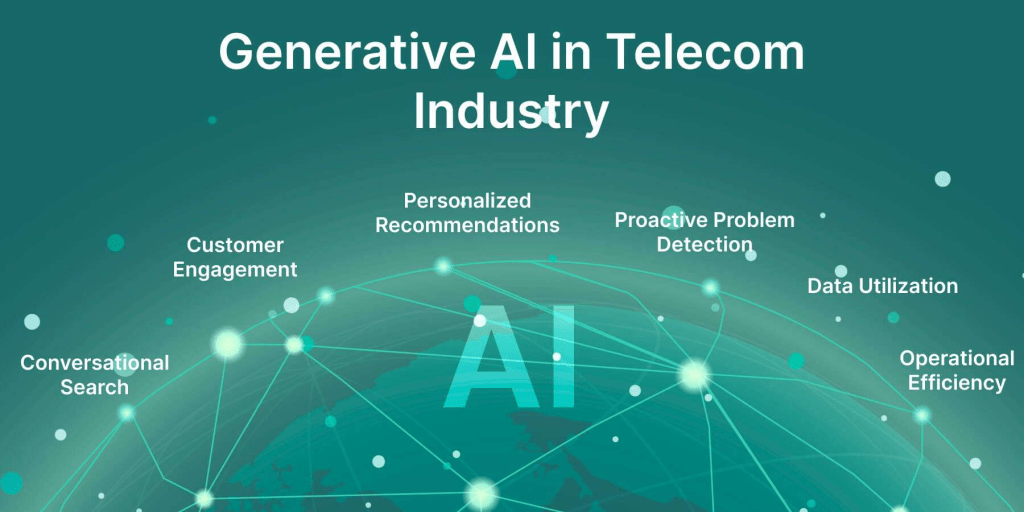
The Future of Enterprise Generative AI Solutions in Telecommunications: A New Era of Innovation
The telecommunications industry stands at the precipice of a technological revolution, driven by the rapid advancement of enterprise generative AI solutions. These AI platforms promise to transform how telecom companies operate, interact with customers, and manage their networks. This article explores the future of enterprise gen AI solution for telecommunications, detailing the potential advancements, applications, and benefits that will redefine the industry.
Understanding Generative AI in Telecommunications
What is Generative AI?
Generative AI is a branch of artificial intelligence that focuses on creating new data or content by learning from existing datasets. It includes technologies like Generative Adversarial Networks (GANs) and transformer models that can produce text, images, music, and more. Gen AI solution for telecommunications can generate predictive models, optimize networks, and enhance customer interactions.
Why Enterprise Generative AI?
Enterprise generative AI solutions are tailored to meet the specific needs of large-scale operations, providing robust, scalable, and secure AI capabilities. For telecommunications companies, the gen AI solution for telecommunications offers the potential to handle massive datasets, support complex workflows, and ensure reliable performance in a rapidly evolving market.
Future Trends in Enterprise Gen AI Solution for Telecommunications
Advanced Network Optimization
Predictive Maintenance and Self-Healing Networks
The future of network management will be dominated by predictive maintenance and self-healing networks. Generative AI will analyze network data to predict potential failures and maintenance needs, allowing proactive intervention before issues impact service. Moreover, AI will enable self-healing networks that automatically detect and rectify faults in real-time, ensuring continuous and reliable connectivity.
Intelligent Resource Allocation
Generative AI will revolutionize how resources are allocated within telecommunications networks. By predicting traffic patterns and demand, AI can dynamically allocate bandwidth and other resources to optimize performance and reduce congestion. This intelligent allocation will lead to more efficient network utilization and improved customer experiences.
Enhanced Customer Experience
Hyper-Personalized Services
Generative AI will drive hyper-personalization in telecommunications. AI will analyze customer data to deliver highly personalized services and recommendations, from tailored content to customized service plans. This level of personalization will enhance customer satisfaction and loyalty by providing relevant and engaging experiences.
AI-Driven Customer Support
The future of customer support will be dominated by AI-driven solutions. Advanced chatbots and virtual assistants will handle more complex queries and provide instant, accurate responses. These AI systems will continuously learn from interactions, improving their performance over time and providing seamless customer support around the clock.
Innovative Applications and Services
Augmented Reality (AR) and Virtual Reality (VR)
Generative AI will play a pivotal role in the development of augmented reality (AR) and virtual reality (VR) applications. In telecommunications, AI will enable the creation of immersive experiences, from virtual meetings to interactive customer service. These applications will open new revenue streams and enhance customer engagement.
5G and Beyond
As 5G networks continue to roll out globally, generative AI will be instrumental in managing and optimizing these advanced networks. AI will help maximize the potential of 5G by optimizing network performance, ensuring low latency, and supporting the deployment of new services. Looking ahead, AI will also be critical in the development and management of future 6G networks.
Operational Efficiency and Cost Reduction
Automation of Routine Tasks
Generative AI will automate routine tasks within telecommunications companies, from billing and customer onboarding to network monitoring and maintenance. This automation will reduce operational costs, minimize human error, and free up employees to focus on more strategic initiatives.
Efficient Fraud Detection
AI-driven fraud detection systems will become more sophisticated, capable of identifying and preventing fraud in real-time. Generative AI will analyze transaction patterns and detect anomalies with high accuracy, protecting both the company and its customers from fraudulent activities.
Data-Driven Decision Making
Predictive Analytics
Predictive analytics powered by generative AI will provide telecommunications companies with actionable insights into customer behavior, market trends, and network performance. These insights will inform strategic decisions, from marketing campaigns to infrastructure investments, ensuring that companies stay ahead of the competition.
Real-Time Insights
Generative AI will enable real-time data analysis, providing instant insights into network performance, customer interactions, and operational metrics. These real-time insights will allow telecommunications companies to make immediate adjustments and optimizations, enhancing overall efficiency and service quality.
Challenges and Considerations
Quality and Accuracy
Ensuring the quality and accuracy of AI-generated outputs is a critical challenge. Telecommunications companies must implement robust validation and testing processes to maintain high standards and ensure that AI solutions deliver reliable results.
Ethical and Privacy Concerns
The use of generative AI raises ethical and privacy concerns, particularly around data usage and transparency. Telecommunications companies must adhere to strict ethical guidelines and regulatory requirements to protect customer data and ensure responsible AI deployment.
Integration with Existing Systems
Successfully integrating generative AI solutions with existing systems and workflows requires careful planning and execution. Companies must invest in training and development to ensure their teams can effectively use AI tools and maximize their potential.
Case Studies and Real-World Applications
Case Study: AI-Powered Network Management at AT&T
AT&T has implemented generative AI solutions to optimize its network management. AI models predict network congestion and automatically adjust resources to ensure optimal performance. This approach has led to improved network reliability and reduced operational costs, demonstrating the potential of AI-driven network management.
Case Study: Vodafone’s AI-Driven Customer Support
Vodafone uses AI-powered chatbots to handle customer inquiries and provide personalized support. These chatbots leverage generative AI to understand and respond to customer queries effectively, enhancing customer satisfaction and reducing response times.
Case Study: Verizon’s Fraud Detection System
Verizon employs generative AI to detect and prevent fraud. AI models analyze transaction patterns and identify anomalies in real-time, generating alerts for suspicious activities. This proactive approach has strengthened Verizon’s security measures and protected its customers from fraud.
The Future Landscape of Telecommunications with Generative AI
Seamless Customer Journeys
The future of telecommunications will feature seamless customer journeys powered by generative AI. From personalized marketing and onboarding to real-time support and tailored services, AI will enhance every touchpoint in the customer lifecycle, creating a more engaging and satisfying experience.
Smart Cities and IoT Integration
Generative AI will play a crucial role in the development of smart cities and the integration of Internet of Things (IoT) devices. Telecommunications companies will leverage AI to manage the vast amounts of data generated by smart devices, ensuring efficient connectivity and enabling innovative services for urban living.
Enhanced Collaboration and Innovation
Generative AI will foster enhanced collaboration and innovation within telecommunications companies. AI-driven insights will inform cross-functional teams, driving innovative solutions and accelerating product development. This collaborative approach will lead to the creation of cutting-edge services and technologies.
Sustainable Operations
AI-driven optimization will contribute to more sustainable operations in telecommunications. By reducing energy consumption, minimizing waste, and optimizing resource use, generative AI will help companies achieve their sustainability goals and reduce their environmental impact.
Conclusion
The future of enterprise generative AI solutions in telecommunications is bright, with the potential to transform every aspect of the industry. From advanced network optimization and enhanced customer experiences to innovative applications and operational efficiency, generative AI will drive unprecedented growth and innovation. While challenges and considerations remain, the benefits of embracing AI far outweigh the risks. As technology continues to evolve, telecommunications companies that leverage the power of generative AI will be well-positioned to lead the industry into a new era of excellence and innovation.
-
The Future of Enterprise Generative AI Platforms for Media: Transforming Content Creation and Distribution
The media industry is undergoing a profound transformation driven by the advent of generative AI platforms. These sophisticated technologies are not only enhancing how content is created and distributed but also revolutionizing audience engagement and operational efficiency. In this article, we will explore the future of enterprise gen AI platform for media, examining their potential impacts and the innovations they promise to bring.

The Evolution of Generative AI in Media
A Brief Overview of Generative AI
Generative AI refers to artificial intelligence systems that can generate new content, such as text, images, audio, and video, based on the data they have been trained on. Unlike traditional AI, which primarily focuses on analyzing and interpreting data, gen AI platform for media creates new data, offering unprecedented opportunities for creative and media industries.
Historical Context
The concept of generative AI has evolved significantly over the past decade. Early implementations focused on basic content creation tasks, but recent advancements have enabled more sophisticated applications, including deepfake technology, automated journalism, and personalized content recommendations.
Transformative Impact on Media
Enhanced Content Creation
Automated Journalism
Gen AI platform for media is poised to revolutionize journalism by automating the creation of news articles, reports, and summaries. These systems can quickly analyze vast amounts of data, identify key trends, and generate coherent and accurate news content, reducing the time and cost associated with traditional journalism.
Creative Writing and Script Generation
In the entertainment industry, AI-driven platforms can assist writers in generating scripts, storylines, and character dialogues. This not only accelerates the creative process but also opens up new possibilities for storytelling by enabling the exploration of diverse narratives and genres.
Visual and Audio Content
Gen AI platform for media can create high-quality visual and audio content, from realistic images and videos to music and sound effects. This capability is particularly valuable in advertising, film production, and gaming, where the demand for immersive and engaging content is continually growing.
Personalized Audience Engagement
Customized Recommendations
AI platforms analyze user behavior and preferences to deliver personalized content recommendations. This enhances user experience by ensuring that audiences receive relevant and engaging content tailored to their interests.
Interactive and Immersive Experiences
The future of media will see a rise in interactive and immersive experiences powered by generative AI. Virtual reality (VR), augmented reality (AR), and AI-driven virtual assistants will play crucial roles in creating engaging and personalized user interactions.
Operational Efficiency and Cost Reduction
Streamlined Production Processes
Generative AI platforms can automate various aspects of media production, from content creation to editing and distribution. This streamlining of processes reduces operational costs and increases efficiency, allowing media companies to focus on strategic initiatives and creative endeavors.
Data-Driven Decision Making
AI platforms provide valuable insights into audience behavior, content performance, and market trends. These data-driven insights enable media companies to make informed decisions, optimize their strategies, and stay ahead of the competition.
Future Innovations in Generative AI for Media
Advanced Deep Learning Models
Improved Content Quality
As deep learning models continue to advance, the quality of AI-generated content will improve significantly. This includes more realistic images and videos, natural-sounding audio, and coherent and engaging written content.
Real-Time Content Generation
Future generative AI platforms will be capable of generating content in real-time, allowing for live, interactive experiences. This will be particularly valuable in live broadcasts, gaming, and social media.
Ethical and Responsible AI
Bias Mitigation
One of the key challenges facing generative AI is the potential for bias in AI-generated content. Future platforms will incorporate advanced algorithms and techniques to detect and mitigate bias, ensuring that content is fair and representative.
Transparency and Accountability
As AI-generated content becomes more prevalent, there will be a growing need for transparency and accountability in AI systems. Future platforms will include features that provide clear explanations of how AI-generated content is created and the data used, fostering trust among users and stakeholders.
Integration with Emerging Technologies
Virtual and Augmented Reality
The integration of generative AI with VR and AR technologies will create new possibilities for immersive media experiences. From virtual tours and interactive storytelling to augmented advertising, these technologies will transform how audiences engage with content.
Blockchain for Content Security
Blockchain technology can enhance the security and integrity of AI-generated content. By providing a decentralized and tamper-proof ledger, blockchain can ensure the authenticity and provenance of digital media, protecting intellectual property rights and combating piracy.
Challenges and Considerations
Technical Challenges
Scalability
As the demand for AI-generated content grows, ensuring the scalability of generative AI platforms will be crucial. This involves developing robust infrastructure and optimizing algorithms to handle large volumes of data and real-time processing.
Integration with Existing Systems
Integrating generative AI platforms with existing media production and distribution systems can be complex. Future platforms will need to offer seamless integration and compatibility with various tools and technologies used in the media industry.
Ethical and Social Implications
Deepfakes and Misinformation
The ability of generative AI to create realistic deepfakes raises concerns about misinformation and its potential impact on society. Addressing these ethical challenges will require the development of detection tools, regulatory frameworks, and public awareness campaigns.
Job Displacement
The automation of content creation and production processes may lead to job displacement in the media industry. It will be important to consider strategies for workforce retraining and upskilling to ensure that professionals can adapt to the changing landscape.
Preparing for the Future
Investing in Research and Development
To stay competitive, media companies must invest in research and development to explore new applications of generative AI. This includes collaborating with AI researchers, experimenting with innovative technologies, and continuously improving AI capabilities.
Building Ethical AI Frameworks
Developing ethical AI frameworks is essential to ensure that generative AI platforms are used responsibly. This involves establishing guidelines for fairness, transparency, and accountability, as well as promoting ethical AI practices within the industry.
Fostering Collaboration and Innovation
Collaboration between media companies, AI developers, and academic institutions will drive innovation and accelerate the adoption of generative AI. By working together, these stakeholders can address technical challenges, share best practices, and create new opportunities for growth.
Conclusion
The future of enterprise generative AI platforms for media is bright, with the potential to transform content creation, distribution, and audience engagement. By harnessing the power of generative AI, media companies can enhance their creative capabilities, streamline operations, and deliver personalized and immersive experiences to their audiences.
As technology continues to evolve, it will be crucial for the media industry to address the technical, ethical, and social challenges associated with generative AI. By investing in research, building ethical frameworks, and fostering collaboration, media companies can unlock the full potential of generative AI and shape the future of the industry.
-
Mastering Innovation: Technology and Techniques for Developing Enterprise Gen AI Solutions for Manufacturing
In the realm of modern manufacturing, the integration of advanced technologies such as generative artificial intelligence (AI) is revolutionizing traditional processes and paving the way for unprecedented efficiencies. This article delves into the essential technologies, methodologies, and techniques utilized in the development of enterprise gen AI solution for manufacturing tailored for its applications.

Introduction to Enterprise Generative AI Solutions
Understanding Generative AI in Manufacturing
Generative AI leverages machine learning algorithms to generate new content, designs, or solutions based on input data and predefined parameters. In manufacturing, these AI-driven platforms analyze vast datasets, optimize processes, predict outcomes, and automate decision-making across the production lifecycle.
Importance of Generative AI in Modern Manufacturing
Generative AI empowers manufacturers to enhance productivity, improve product quality, and drive innovation by leveraging AI-driven insights and automation. By integrating generative AI solutions, manufacturers can achieve operational excellence, meet dynamic market demands, and maintain competitive advantage in a global marketplace.
Core Technologies for Developing Gen AI Solution for Manufacturing
1. Machine Learning Algorithms
Supervised and Unsupervised Learning
Machine learning algorithms underpin Gen AI Solution for Manufacturing by enabling systems to learn from historical data, identify patterns, and make data-driven predictions. Supervised learning techniques train AI models with labeled datasets, while unsupervised learning discovers patterns and structures within unlabeled data, essential for anomaly detection and clustering in manufacturing.
Reinforcement Learning Applications
Reinforcement learning facilitates AI systems’ ability to interact with dynamic environments, optimize decision-making, and learn from feedback. In manufacturing, reinforcement learning enhances adaptive control processes, autonomous systems, and robotic applications, fostering continuous improvement and operational efficiency.
2. Computer Vision and Image Processing
Visual Data Analysis
Computer vision technologies enable Gen AI Solutions for Manufacturing to interpret and analyze visual data from cameras, sensors, and IoT devices within manufacturing environments. AI-powered image processing techniques identify defects, anomalies, or quality issues in real-time, supporting automated inspection systems and enhancing product quality assurance processes.
Object Recognition and Spatial Awareness
Generative AI solutions incorporate object recognition algorithms to identify and classify objects within manufacturing settings, optimizing inventory management, logistical operations, and automated material handling processes. Spatial awareness capabilities enable AI systems to navigate and interact within complex industrial environments, enhancing operational safety and efficiency.
3. Natural Language Processing (NLP)
Text Data Analysis
Natural language processing algorithms analyze textual data, enabling generative AI platforms to extract insights, derive meaning, and facilitate human-machine communication within manufacturing workflows. NLP applications streamline documentation, support knowledge management systems, and enhance decision-making processes based on textual information from reports, manuals, or customer feedback.
Voice Recognition and Command Interfaces
AI-driven voice recognition technologies enable hands-free operation and voice-controlled interfaces in manufacturing environments, enhancing worker productivity, operational efficiency, and safety. Voice command interfaces facilitate real-time communication with AI systems, enabling prompt responses, task automation, and operational insights through natural language interactions.
Techniques for Developing Enterprise Generative AI Solutions in Manufacturing
1. Data Acquisition and Preprocessing
Data Collection Strategies
Effective data acquisition strategies involve collecting diverse datasets from sensors, IoT devices, and operational systems within manufacturing facilities. Generative AI solutions rely on high-quality, labeled data to train models, validate algorithms, and ensure accurate predictions for process optimization, predictive maintenance, and quality control applications.
Data Preprocessing Techniques
Data preprocessing techniques clean, normalize, and transform raw datasets into structured formats suitable for AI model training. Techniques such as data cleaning, feature scaling, and dimensionality reduction enhance data quality, mitigate noise or outliers, and improve the performance of generative AI algorithms in manufacturing contexts.
2. Model Development and Optimization
AI Model Selection
Choosing appropriate AI models, such as deep learning architectures (e.g., convolutional neural networks, recurrent neural networks) or generative adversarial networks (GANs), aligns with specific manufacturing use cases. Model selection considers factors like data complexity, computational resources, and deployment requirements to achieve optimal performance in real-time applications.
Hyperparameter Tuning
Hyperparameter tuning optimizes AI model performance by adjusting parameters that govern model learning processes, such as learning rate, batch size, and activation functions. Automated techniques like grid search or Bayesian optimization refine model configurations, enhance accuracy, and accelerate convergence during training phases in generative AI development.
3. Deployment and Integration
Scalable Infrastructure Design
Designing scalable infrastructure architectures, such as cloud-based platforms or edge computing solutions, supports generative AI model deployment and integration within manufacturing environments. Scalable infrastructures ensure robust performance, flexibility, and cost-efficiency for real-time data processing, inference, and continuous model updates.
API Integration and Interoperability
Generative AI solutions integrate with existing manufacturing systems through application programming interfaces (APIs), ensuring seamless interoperability, data exchange, and workflow integration. API frameworks facilitate communication between AI platforms, enterprise resource planning (ERP) systems, manufacturing execution systems (MES), and IoT devices, enhancing operational connectivity and data-driven decision-making capabilities.
Future Directions and Innovations in Enterprise Generative AI for Manufacturing
1. AI-Powered Autonomous Systems
Autonomous Manufacturing Processes
Future developments in generative AI will advance autonomous manufacturing systems capable of self-optimization, adaptive control, and real-time decision-making. AI-powered autonomous systems will enable manufacturers to achieve higher levels of efficiency, flexibility, and responsiveness in dynamic production environments.
Cognitive Manufacturing and Predictive Capabilities
Generative AI platforms will evolve to incorporate cognitive capabilities, enabling machines to learn, reason, and adapt based on experience and environmental feedback. Cognitive manufacturing systems will enhance predictive capabilities, anticipate operational challenges, and proactively optimize manufacturing processes for enhanced productivity and sustainability.
2. Innovation in Human-Machine Collaboration
Augmented Reality and Virtual Reality Integration
AI-driven generative solutions will integrate augmented reality (AR) and virtual reality (VR) technologies to enhance human-machine collaboration and training in manufacturing settings. AR/VR interfaces will provide immersive experiences, visualizations, and interactive simulations that improve worker skills, task efficiency, and operational safety.
Explainable AI and Decision Support Systems
Advancements in explainable AI will enhance transparency, interpretability, and trustworthiness of AI-driven decisions within manufacturing operations. Explainable AI techniques will empower manufacturers to understand AI model reasoning, validate outcomes, and make informed decisions based on interpretable insights and actionable recommendations.
Conclusion
The evolution of enterprise generative AI solutions is reshaping manufacturing paradigms, empowering manufacturers to achieve new levels of efficiency, innovation, and competitive differentiation. By leveraging advanced technologies and methodologies, manufacturers can harness the transformative potential of generative AI to optimize processes, enhance product quality, and drive sustainable growth in a rapidly evolving global marketplace.
As generative AI continues to advance, its integration into manufacturing operations will drive continuous improvement, foster collaboration between humans and machines, and unlock new opportunities for innovation and operational excellence. By embracing technology-driven solutions, manufacturers can navigate complexities, capitalize on emerging trends, and lead the industry towards a smarter, more connected future.
-
Transformative Impact: Enterprise Gen AI Solutions for Human Resources on the Industry
Introduction
The advent of Enterprise Generative AI (Gen AI) solutions has ushered in a new era of innovation and efficiency in Human Resources (HR) management. These advanced AI technologies are reshaping how organizations recruit, develop, and retain talent, thereby driving significant changes across the industry. This article explores the profound impact of Enterprise Gen AI solutions on the HR industry, highlighting key benefits, emerging trends, and future implications.

Understanding Enterprise Gen AI Solutions for HR
Enterprise Gen AI solutions encompass a range of AI-driven technologies, including machine learning, natural language processing (NLP), and predictive analytics. These solutions are designed to automate HR processes, analyze large datasets, and generate actionable insights to support strategic decision-making and enhance employee experiences.
Key Components of Enterprise Gen AI Solution for Human Resources
To effectively transform HR operations, Enterprise Gen AI solution for human resources typically include:
- Machine Learning Algorithms: Algorithms trained on HR data to predict trends, automate routine tasks like candidate screening, and optimize workforce management strategies.
- Natural Language Processing (NLP): Capabilities to understand and generate human-like text, facilitating communication with employees, analyzing feedback, and generating personalized responses.
- Predictive Analytics: Utilization of historical and real-time data to forecast workforce trends, identify potential risks, and recommend proactive HR interventions.
Impact of Enterprise Gen AI Solutions on the HR Industry
The adoption of Enterprise Gen AI Solution for Human Resources has had far-reaching implications across various domains within the industry.
1. Enhanced Recruitment and Talent Acquisition
Improved Efficiency:
Enterprise Gen AI solutions streamline the recruitment process by automating candidate sourcing, screening, and matching. This efficiency leads to reduced time-to-hire, improved candidate quality, and enhanced recruitment ROI.
Personalized Candidate Experience:
AI-driven tools enable personalized interactions with candidates, providing tailored feedback, interview scheduling assistance, and insights into career development opportunities within the organization.
2. Optimized Workforce Management and Planning
Strategic Insights:
Predictive analytics capabilities of Gen AI platforms provide HR professionals with deep insights into workforce trends, skill gaps, and succession planning needs. This data-driven approach enables proactive workforce management strategies aligned with organizational goals.
Agile Decision-Making:
Real-time data analysis empowers HR leaders to make informed decisions promptly, whether it’s adjusting staffing levels, reallocating resources, or implementing targeted training programs to address evolving business needs.
3. Empowered Employee Development and Engagement
Personalized Learning Paths:
Gen AI Solution for Human Resources recommends personalized learning and development opportunities based on individual employee profiles, performance data, and career aspirations. This approach enhances employee skills and fosters a culture of continuous learning.
Enhanced Employee Engagement:
By analyzing employee feedback, sentiment, and engagement metrics, Gen AI solutions help HR teams identify factors influencing employee satisfaction and take proactive steps to improve workplace culture and retention rates.
4. Strategic Insights and Decision-Making
Data-Driven HR Strategies:
AI-driven insights enable HR departments to formulate data-driven strategies for talent acquisition, performance management, and organizational development. These strategies are aligned with broader business objectives, contributing to overall company growth and competitiveness.
Risk Mitigation:
Predictive analytics models can anticipate potential HR risks such as turnover trends, compliance issues, or skill shortages. HR leaders can proactively implement interventions to mitigate risks and maintain organizational stability.
Case Studies: Real-World Examples of Impact
Case Study 1: Company A Implements AI-Powered Recruitment
Company A, a multinational tech firm, implemented an Enterprise Gen AI platform for recruitment. By leveraging AI algorithms for resume screening and candidate matching, they reduced their average time-to-hire by 30% and improved candidate quality by 25%. This transformation not only optimized HR processes but also enhanced the company’s ability to attract top talent in a competitive market.
Case Study 2: Company B Enhances Employee Engagement with AI Insights
Company B integrated AI-driven sentiment analysis tools into their employee feedback processes. By analyzing employee feedback from surveys and communication channels, they identified key drivers of engagement and implemented targeted initiatives that increased employee satisfaction scores by 15% within a year. This approach not only boosted morale but also improved overall productivity and retention rates.
Future Trends and Implications
Looking ahead, the future of Enterprise Gen AI solutions in HR continues to evolve with advancements in AI technology and shifting industry dynamics.
1. AI-Powered HR Analytics
Enhanced Predictive Capabilities:
Future AI solutions will leverage advanced analytics and machine learning to predict workforce trends with greater accuracy, enabling preemptive workforce planning and strategic decision-making.
Integration with Emerging Technologies:
Integration with technologies like augmented reality (AR), virtual reality (VR), and blockchain may further enhance HR functionalities, from immersive training experiences to secure employee data management.
2. Ethical AI and Transparency
Bias Detection and Mitigation:
There will be a heightened focus on developing AI models that are transparent, fair, and unbiased to avoid perpetuating biases in recruitment, performance evaluation, and decision-making processes.
Regulatory Compliance:
As data protection regulations evolve globally, AI solutions in HR will need to adhere to stringent compliance standards to safeguard employee privacy and maintain trust.
Conclusion
Enterprise Generative AI solutions have unleashed a wave of innovation and transformation across the HR industry, revolutionizing how organizations manage their most valuable asset: their people. By automating processes, enhancing decision-making with data-driven insights, and fostering personalized employee experiences, Gen AI platforms empower HR departments to become strategic partners in driving business success.
In conclusion, the impact of Enterprise Gen AI solutions on the HR industry is profound and multifaceted, paving the way for a future where HR practices are more agile, efficient, and aligned with organizational goals. As organizations continue to embrace AI technologies, the journey towards digital transformation in HR will undoubtedly redefine workforce management and shape the future of work.
-
Subscribe
Subscribed
Have a WordPress.com account? Log in now.

