The telecommunications industry stands at the precipice of a technological revolution, driven by the rapid advancement of enterprise generative AI solutions. These AI platforms promise to transform how telecom companies operate, interact with customers, and manage their networks. This article explores the future of enterprise gen AI solution for telecommunications, detailing the potential advancements, applications, and benefits that will redefine the industry.
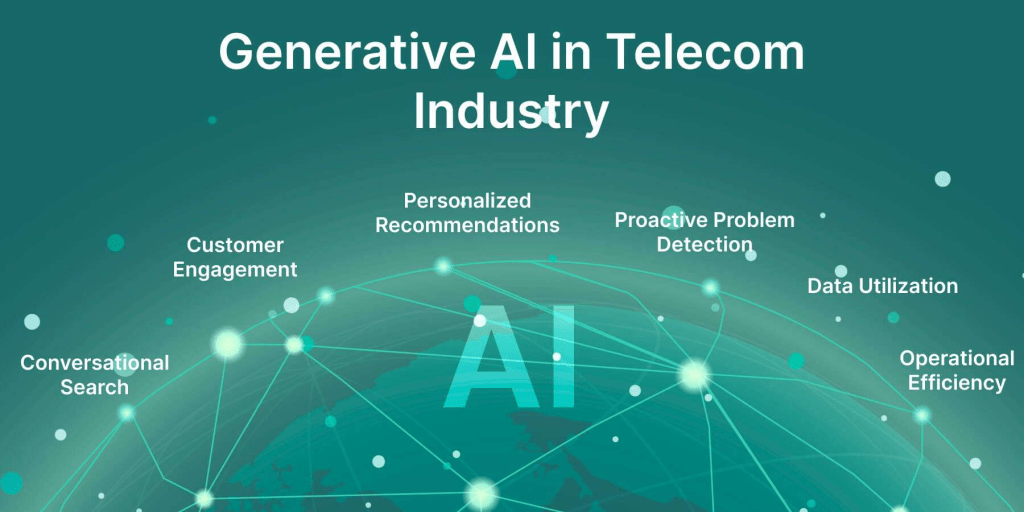
Understanding Generative AI in Telecommunications
What is Generative AI?
Generative AI is a branch of artificial intelligence that focuses on creating new data or content by learning from existing datasets. It includes technologies like Generative Adversarial Networks (GANs) and transformer models that can produce text, images, music, and more. Gen AI solution for telecommunications can generate predictive models, optimize networks, and enhance customer interactions.
Why Enterprise Generative AI?
Enterprise generative AI solutions are tailored to meet the specific needs of large-scale operations, providing robust, scalable, and secure AI capabilities. For telecommunications companies, the gen AI solution for telecommunications offers the potential to handle massive datasets, support complex workflows, and ensure reliable performance in a rapidly evolving market.
Future Trends in Enterprise Gen AI Solution for Telecommunications
Advanced Network Optimization
Predictive Maintenance and Self-Healing Networks
The future of network management will be dominated by predictive maintenance and self-healing networks. Generative AI will analyze network data to predict potential failures and maintenance needs, allowing proactive intervention before issues impact service. Moreover, AI will enable self-healing networks that automatically detect and rectify faults in real-time, ensuring continuous and reliable connectivity.
Intelligent Resource Allocation
Generative AI will revolutionize how resources are allocated within telecommunications networks. By predicting traffic patterns and demand, AI can dynamically allocate bandwidth and other resources to optimize performance and reduce congestion. This intelligent allocation will lead to more efficient network utilization and improved customer experiences.
Enhanced Customer Experience
Hyper-Personalized Services
Generative AI will drive hyper-personalization in telecommunications. AI will analyze customer data to deliver highly personalized services and recommendations, from tailored content to customized service plans. This level of personalization will enhance customer satisfaction and loyalty by providing relevant and engaging experiences.
AI-Driven Customer Support
The future of customer support will be dominated by AI-driven solutions. Advanced chatbots and virtual assistants will handle more complex queries and provide instant, accurate responses. These AI systems will continuously learn from interactions, improving their performance over time and providing seamless customer support around the clock.
Innovative Applications and Services
Augmented Reality (AR) and Virtual Reality (VR)
Generative AI will play a pivotal role in the development of augmented reality (AR) and virtual reality (VR) applications. In telecommunications, AI will enable the creation of immersive experiences, from virtual meetings to interactive customer service. These applications will open new revenue streams and enhance customer engagement.
5G and Beyond
As 5G networks continue to roll out globally, generative AI will be instrumental in managing and optimizing these advanced networks. AI will help maximize the potential of 5G by optimizing network performance, ensuring low latency, and supporting the deployment of new services. Looking ahead, AI will also be critical in the development and management of future 6G networks.
Operational Efficiency and Cost Reduction
Automation of Routine Tasks
Generative AI will automate routine tasks within telecommunications companies, from billing and customer onboarding to network monitoring and maintenance. This automation will reduce operational costs, minimize human error, and free up employees to focus on more strategic initiatives.
Efficient Fraud Detection
AI-driven fraud detection systems will become more sophisticated, capable of identifying and preventing fraud in real-time. Generative AI will analyze transaction patterns and detect anomalies with high accuracy, protecting both the company and its customers from fraudulent activities.
Data-Driven Decision Making
Predictive Analytics
Predictive analytics powered by generative AI will provide telecommunications companies with actionable insights into customer behavior, market trends, and network performance. These insights will inform strategic decisions, from marketing campaigns to infrastructure investments, ensuring that companies stay ahead of the competition.
Real-Time Insights
Generative AI will enable real-time data analysis, providing instant insights into network performance, customer interactions, and operational metrics. These real-time insights will allow telecommunications companies to make immediate adjustments and optimizations, enhancing overall efficiency and service quality.
Challenges and Considerations
Quality and Accuracy
Ensuring the quality and accuracy of AI-generated outputs is a critical challenge. Telecommunications companies must implement robust validation and testing processes to maintain high standards and ensure that AI solutions deliver reliable results.
Ethical and Privacy Concerns
The use of generative AI raises ethical and privacy concerns, particularly around data usage and transparency. Telecommunications companies must adhere to strict ethical guidelines and regulatory requirements to protect customer data and ensure responsible AI deployment.
Integration with Existing Systems
Successfully integrating generative AI solutions with existing systems and workflows requires careful planning and execution. Companies must invest in training and development to ensure their teams can effectively use AI tools and maximize their potential.
Case Studies and Real-World Applications
Case Study: AI-Powered Network Management at AT&T
AT&T has implemented generative AI solutions to optimize its network management. AI models predict network congestion and automatically adjust resources to ensure optimal performance. This approach has led to improved network reliability and reduced operational costs, demonstrating the potential of AI-driven network management.
Case Study: Vodafone’s AI-Driven Customer Support
Vodafone uses AI-powered chatbots to handle customer inquiries and provide personalized support. These chatbots leverage generative AI to understand and respond to customer queries effectively, enhancing customer satisfaction and reducing response times.
Case Study: Verizon’s Fraud Detection System
Verizon employs generative AI to detect and prevent fraud. AI models analyze transaction patterns and identify anomalies in real-time, generating alerts for suspicious activities. This proactive approach has strengthened Verizon’s security measures and protected its customers from fraud.
The Future Landscape of Telecommunications with Generative AI
Seamless Customer Journeys
The future of telecommunications will feature seamless customer journeys powered by generative AI. From personalized marketing and onboarding to real-time support and tailored services, AI will enhance every touchpoint in the customer lifecycle, creating a more engaging and satisfying experience.
Smart Cities and IoT Integration
Generative AI will play a crucial role in the development of smart cities and the integration of Internet of Things (IoT) devices. Telecommunications companies will leverage AI to manage the vast amounts of data generated by smart devices, ensuring efficient connectivity and enabling innovative services for urban living.
Enhanced Collaboration and Innovation
Generative AI will foster enhanced collaboration and innovation within telecommunications companies. AI-driven insights will inform cross-functional teams, driving innovative solutions and accelerating product development. This collaborative approach will lead to the creation of cutting-edge services and technologies.
Sustainable Operations
AI-driven optimization will contribute to more sustainable operations in telecommunications. By reducing energy consumption, minimizing waste, and optimizing resource use, generative AI will help companies achieve their sustainability goals and reduce their environmental impact.
Conclusion
The future of enterprise generative AI solutions in telecommunications is bright, with the potential to transform every aspect of the industry. From advanced network optimization and enhanced customer experiences to innovative applications and operational efficiency, generative AI will drive unprecedented growth and innovation. While challenges and considerations remain, the benefits of embracing AI far outweigh the risks. As technology continues to evolve, telecommunications companies that leverage the power of generative AI will be well-positioned to lead the industry into a new era of excellence and innovation.
 Techno News Blog
Leave a comment